01 / THE BASICS
WHAT YOU'RE ACTUALLY BUYING
IMAGE INTENSIFICATION
Analog night vision intensifies existing light. An infrared illuminator can help in very dark environments, but it also emits energy that other compatible equipment may detect. Daylight and bright-source precautions depend on the specific device and tube manufacturer.
THERMAL IMAGING
Thermal cameras detect differences in infrared radiation associated with temperature. They do not deliver the same image as intensifier tubes, and they have different strengths and limitations. Choose based on what you need to observe.
02 / TUBE SPECS
READ THE DATA SHEET
SNRSIGNAL-TO-NOISE RATIO
A measure of image signal relative to noise under a defined test condition. Higher SNR generally gives a cleaner image when available light is low.
LP/MMRESOLUTION
Reported in line pairs per millimeter. Resolution describes how much detail the tube can resolve in a test; actual image quality also depends on the optics and environment.
FOMFIGURE OF MERIT
Resolution multiplied by SNR. Useful for a broad comparison, but a FOM number alone says nothing about halo, EBI, blemishes, or the system's optics.
EBIEQUIVALENT BACKGROUND ILLUMINATION
The tube's internal background signal in the absence of light. Lower values can help in extremely dark conditions. EBI changes with temperature.
HALOHALO
The apparent glow around concentrated light sources. Lower measured halo generally means a smaller ring around lights; it isn't a measure of total image clarity.
GAINGAIN
Image intensification/amplification. Manual gain control changes displayed brightness on compatible systems; it doesn't change a tube's underlying SNR or resolution.
03 / THE PLATFORM
BUILD A COMPLETE SYSTEM
MONOCULAR OR BINOCULAR?
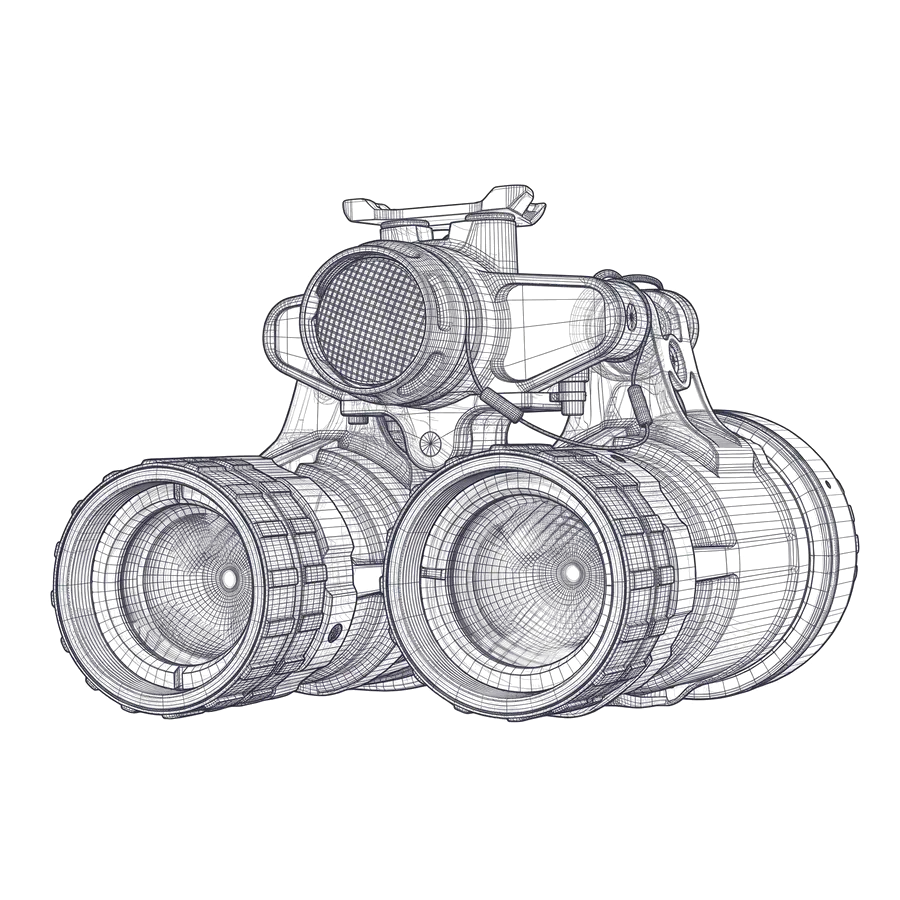
A monocular offers a lower-cost entry and can leave one eye unaided. Binocular systems provide an image to both eyes and may be more comfortable for extended use. Weight, adjustment, bridge design and mounting matter as much as the housing name.
TEST WHAT MATTERS
Compare tube data by serial number, cosmetic spot zones, usable focus, image alignment, weight, mounting compatibility, warranty terms and actual lead time. If a configuration is built to order, ask what will be documented before it ships.
WHITE VS. GREEN PHOSPHOR
Phosphor color changes the appearance of the image, not the underlying sensitivity on its own. Comfort and preference vary between users; the tube's measured performance is more useful than color alone.
BE REALISTIC ABOUT LOW LIGHT
Cloud cover, canopy, weather, moonlight and artificial lighting affect performance. A sample photo or advertised FOM cannot promise a fixed identification distance in the field.
04 / COMPLIANCE & CAREKNOW BEFORE YOU TRANSFER.
Some night vision devices, components and associated technical data are subject to U.S. export controls. Classification depends on the specific item. Do not assume all equipment is automatically ITAR-controlled or freely exportable. Confirm classification, destination, end user and any authorization with qualified export counsel or the relevant U.S. authority before an international transfer.
Protect equipment from improper light exposure, moisture, impact and incorrect batteries. Follow the manufacturer’s instructions for the particular system.